
Sunday, May 10, 2015
Appalachian Trail Summary: 25 miles through Georgia

Friday, March 27, 2015
Student Gender/Sexuality Identity
Warning: This article present some homophobic epithets as examples of intolerant language.
A
certainly non-exhaustive list of heterosexism and homophobia, and
links for some that you may not have realized was a problem:
Students
of education have a duty to discuss not only racial diversity and
cultural diversity but sexual diversity, and all the for the same
reasons. Just as a classroom will be ethnically and culturally
diverse it will be sexually diverse. Some might argue that young
children are not sexually aware yet and therefore do not count in
this regard, and that is incorrect. Children raised in families or
with family friends of diverse sexual orientations or gender
identities are part of this sexually diverse group.
Why
does this even matter in a classroom that is not “sex education”,
like Language Arts or History? Bullying, for one. Bullying, whether
physical or indirect in the form of threats, shunning, or rumors, can
leave emotional scarring and hinder a students emotional and academic
progress. Epithets like “fag” or “dyke”, “queer” and
insulting phrases like “that's so gay” or “no homo” place
non-heterosexual orientation in a negative and deviant light. It
gives unspoken credence to the incorrect assumption that
non-heterosexual orientation is itself deviant, perverse, or even
chosen out of rebellion. This way of thinking is called
“heterosexism”. Homophobia is the common term usually used for
attitudes of perceiving non-heterosexuality as negative and is used
when these attitudes manifest in outward expressions in bullying,
prejudicial acts, and intolerance. The term has also been applied to
those who disdain people with non-traditional gender identities,
though gender identity is not strictly related to sexual orientation.
Teachers
often find themselves in loco parentis as students come to
them for help with peer relationships. Sometimes these are negative
relationships where one student is being bullied by another. In some
rare occasions the students may seek guidance from a teacher about
romantic relationships, especially if the student feels they cannot
approach their friends or parents. How a teacher handles occasions of
homophobia can impact a student for life.
First,
one hopes that a teacher has the education and happiness of their
students in mind and would bring little to no gender,
gender-identity, or sexuality bias into the classrooms themselves.
Joining in with students who are laughing or joking in a heterosexist
way can even further isolate and alienate students who are LGBTQA
(lesbian, gay, bisexual, transgendered, queer, [straight]-ally) or
those have LGBTQA friends and family.
Second,
teachers must be mindful of the signs of bullying or intolerance and
do their best to put a stop to it. Obviously students using epithets
in class would be told to curb their language, but teachers must also
mind phrases like “that's so gay”. This seemingly simple phrase
is perhaps more offensive because it is so simple and widely
accepted. Would a teacher turn a deaf ear to comments like “that's
so black”, “don't be a Jew”, or “he's being retarded”? No!
Those phrases are offensive and used to insult the student and
members of those communities by insinuating they are are negative
themselves! Then it is neither acceptable to allow “gay” or
“homosexual” to be an insult. No one uses “heterosexual” as
an insult.
Non-Heterosexuals
and people with non-traditional gender-identity exist. They are
students in our school and their friends and family are friends in
our schools. They deserve the same education, protection, and
guidance as any other student.
My
college Diversity class listed an amazing list of resources, and I
would like to share my favorites with you.
TheYoungTurks - Fox
News Bias On Gay Rights In Public Schools
- Bullying (broad term!)
- "Joking" heterosexist comments or insults. ("so gay" etc.)
- Housing discrimination.
- Family planning & adoption discrimination.
- Negative/Harmful stereotypes in the media. http://usatoday30.usatoday.com/life/movies/news/2009-07-11-glaad-bruno_N.htm
- Gender/sexuality 'correction' counseling (which are usually abusive and dangerous). http://www.huffingtonpost.com/2012/05/13/fight-against-gay-convers_n_1513043.html
- Genderization of toys and stigmatizing those who play with "wrong" gendered toys. http://www.queerty.com/what-does-dr-phil-think-parents-should-do-when-their-sons-play-with-barbies-take-away-the-barbies-20110205/
- Physical violence. http://en.wikipedia.org/wiki/Matthew_Shepard
- Vandalism (of objects owned or frequented by LGBTQA).
- Misinformation
and Miseducation that "only gays" get certain diseases
(HIV). (You don't need a link here, it's a virus, and viruses don't
care what sexuality/gender you are).
Saturday, November 30, 2013
Anthropology of Nature: Week 14 - 20131130
This blog entry is part of a project for the class Anthropology of Nature.
Class Reflections:
This week we did presentations based on the book Conservation is our Government Now
by Paige West. The book itself is very interesting, especially after
taking Environment and Society with Professor S. She was a
geologist by training, petrologist by trade, and it was very interesting
to see Environmentalism through her eyes, and I think I see that same
representation of it through Dr. West's eyes. These educated people are
looking at environmentalism from the perspective of one other than the
environmentalist. Now, Professor S was an environmentalist, but she
showed us much about greenwashing and I had to (and constantly try to)
re-evaluate my own views on environmental acts. I did not agree with her
all the time, just as I do not always agree with Dr. West, but both
tend to have one major view in common: that politicising and
governmentalising environmentalism tends to do more harm than good, in
one way or the other. This is, of course, a very broad and sweeping
generalizations on both of their opinions, and could be struck down when
investigated critically, but serves its purpose here.
I will also note that I was grateful that I was not the only person to point out the societal damage caused by the reformation of the Maimafu peoply by the Seventh Day Adventists. I really truly try to leave religion out of conservations and lessons, especially when the conversation is scientifically based, but as soon as you mention politics it's almost impossible NOT to mention religion. Especially when the politickers are the religionists! I did get an odd high-five from a fellow student over "telling it out", whatever that means. I'm not sure if he was more impressed by the religion part or the rest of it, but I would guess the latter.
Some of the other presentations were quite interesting, and some, of course, were less interesting. I had already planned on finishing the book, since it is actually really intersting. Funny how my motivation waned when I realized it was assigned and no longer intrinsic! Weird.
Observations of Environmental Anthropology in the Specimen "Me":
I've been thinking hard about how to articulate what I want to do with Environmental Science: what I want to get out of it and what I want to "do with it" when I get done with the masters. I met with a professor about being my graduate advisor in the program, and the answers I gave did not seem to satisfy him. It also turned out that though he's worked with birds via population genetics, it's not really his focus, and he thinks I should try someone else. Le sigh. It also seems that even though I'm taking the GRE right after finals, he (and it seems most) won't want to risk getting involved with me until after they see the scores. It makes sense, but does put a hitch in my plans. I'm not sure if I'll be able to secure a letter from an advisor over Winter Break, and my paperwork needs to be completed by Febrauary, when they make the funding decisions. They have some assistanceships available, and I honestly cannot afford to go to graduate school without one. At least, not anywhere near full time. I will find a way, one class at a time, but that resulted in a very long bachelors experience I am hoping to not repeat. So. I need to hone my desires, not so sharp as to already have an idea for my thesis, but sharp enough to be able to articulate (better) what I want out of a masters in Env Sci. Apparently, "doing research and applying that research to conservation projects", was not specific enough. Granted. Now to fix it. Soon.
Ethnography of the South Floridian:
I do not have much to go in this slot this week. At least, nothing positive.
I volunteered with MGSA at the football game. We set up recycle bins and Clearstream recycle bins, and then cleaned up after the tailgate parties. Oh, my. I could not believe the waste and garbage. It was... painful. Seriously. The amount of recycleable materials (glass, plastic, and aluminum) just strewn about, near recycle bins, overflowing from black waste bins, was, unbelievable. I found near a dozen 8 oz water bottles, full, unopened, mired in a 1.5ft diameter puddle of uneaten potato wedges and fry grease. It was so stomach-turning that I could not bring myself to recover the bottles to donate somewhere. Just, unbelievable disgusting. The pile itself was less than a foot from the garbage can, which was full, mostly of recyclables. Cigarette butts, glossy postcard-style ads, plastic bits from decorative whatnots, just, everywhere. Broken thong sandals, hats, reusable cups, just everything. It looked like the opening scene from a post-apocalyptic movie, only instead of dead cars on a dusty road it was party waste on a very green lawn. Ugly. It was so ugly. And all those drinking laughing dancing playing people, seem so ugly.
A man threw his cigarette butt on the ground in front of my house, after buckling his small daughter into the backseat of their Honda CRV style vehicle. I used to think that if I was the facist-dictator-of-America, I would have executed people who littered, because it evinced a certain lack of participation in the continued upkeep of civilization and therefore denoted a uselessness in the human. I've grown up a little, now, were I the facist-dictator-of-America, I might just demand a pinky joint. Especially for cigarette butts. Those things take forever to decompose, and a lot get eaten by animals. I could link a bunch of resources and inundate you with my empassioned disdain for the habit and the waste it causes, but I think I've already painted myself in a negative light this time around.
Cest la vie.
But if you get curious, http://www.cigarettelitter.org/index.asp?PageName=Facts
Class Reflections:
 |
| From GoodReads |
I will also note that I was grateful that I was not the only person to point out the societal damage caused by the reformation of the Maimafu peoply by the Seventh Day Adventists. I really truly try to leave religion out of conservations and lessons, especially when the conversation is scientifically based, but as soon as you mention politics it's almost impossible NOT to mention religion. Especially when the politickers are the religionists! I did get an odd high-five from a fellow student over "telling it out", whatever that means. I'm not sure if he was more impressed by the religion part or the rest of it, but I would guess the latter.
Some of the other presentations were quite interesting, and some, of course, were less interesting. I had already planned on finishing the book, since it is actually really intersting. Funny how my motivation waned when I realized it was assigned and no longer intrinsic! Weird.
Observations of Environmental Anthropology in the Specimen "Me":
I've been thinking hard about how to articulate what I want to do with Environmental Science: what I want to get out of it and what I want to "do with it" when I get done with the masters. I met with a professor about being my graduate advisor in the program, and the answers I gave did not seem to satisfy him. It also turned out that though he's worked with birds via population genetics, it's not really his focus, and he thinks I should try someone else. Le sigh. It also seems that even though I'm taking the GRE right after finals, he (and it seems most) won't want to risk getting involved with me until after they see the scores. It makes sense, but does put a hitch in my plans. I'm not sure if I'll be able to secure a letter from an advisor over Winter Break, and my paperwork needs to be completed by Febrauary, when they make the funding decisions. They have some assistanceships available, and I honestly cannot afford to go to graduate school without one. At least, not anywhere near full time. I will find a way, one class at a time, but that resulted in a very long bachelors experience I am hoping to not repeat. So. I need to hone my desires, not so sharp as to already have an idea for my thesis, but sharp enough to be able to articulate (better) what I want out of a masters in Env Sci. Apparently, "doing research and applying that research to conservation projects", was not specific enough. Granted. Now to fix it. Soon.
Ethnography of the South Floridian:
I do not have much to go in this slot this week. At least, nothing positive.
I volunteered with MGSA at the football game. We set up recycle bins and Clearstream recycle bins, and then cleaned up after the tailgate parties. Oh, my. I could not believe the waste and garbage. It was... painful. Seriously. The amount of recycleable materials (glass, plastic, and aluminum) just strewn about, near recycle bins, overflowing from black waste bins, was, unbelievable. I found near a dozen 8 oz water bottles, full, unopened, mired in a 1.5ft diameter puddle of uneaten potato wedges and fry grease. It was so stomach-turning that I could not bring myself to recover the bottles to donate somewhere. Just, unbelievable disgusting. The pile itself was less than a foot from the garbage can, which was full, mostly of recyclables. Cigarette butts, glossy postcard-style ads, plastic bits from decorative whatnots, just, everywhere. Broken thong sandals, hats, reusable cups, just everything. It looked like the opening scene from a post-apocalyptic movie, only instead of dead cars on a dusty road it was party waste on a very green lawn. Ugly. It was so ugly. And all those drinking laughing dancing playing people, seem so ugly.
A man threw his cigarette butt on the ground in front of my house, after buckling his small daughter into the backseat of their Honda CRV style vehicle. I used to think that if I was the facist-dictator-of-America, I would have executed people who littered, because it evinced a certain lack of participation in the continued upkeep of civilization and therefore denoted a uselessness in the human. I've grown up a little, now, were I the facist-dictator-of-America, I might just demand a pinky joint. Especially for cigarette butts. Those things take forever to decompose, and a lot get eaten by animals. I could link a bunch of resources and inundate you with my empassioned disdain for the habit and the waste it causes, but I think I've already painted myself in a negative light this time around.
Cest la vie.
But if you get curious, http://www.cigarettelitter.org/index.asp?PageName=Facts
Saturday, November 23, 2013
Anthropology of Nature: Week 13 - 20131123
This blog entry is part of a project for the class Anthropology of Nature.
Class Reflections:
On Wednesday I got to listen to some fellow students read and show their journal entries. It was really nice to hear my fellow biologist's journal sound as it did, though now I seem to have a problem qualifying it. Mine feels this way to me, when I reflect upon it. Not, technical, per say, but certainly different from those I heard in class. More, analytic maybe. Does that mean I remove myself from the subject? Certainly not. I read once that people might think a scientist loses the ability to see the magic in nature, and therefore cannot love it. On the contrary, the scientist sees the wonder of nature through an entirely different lens, and is still astounded by it. I grok that wonder in the other students in class. I heard their prose and saw them play and listened to their words, and smiled. I love feeling like they are actually interested in being part of their environment, an active and aware part instead of this sad view I seem to have of others (with the littering and the laissez-faire attitude over water and air quality). Someone started up the conversation about litter again, and I was almost overjoyed! Mission Green was tabling that day and bringing volunteers on short litter walks around Heritage Park! I of course announced it to any that might be interested. I did have one girl come and give her contact information! YAY!
On Wednesday I got to listen to some fellow students read and show their journal entries. It was really nice to hear my fellow biologist's journal sound as it did, though now I seem to have a problem qualifying it. Mine feels this way to me, when I reflect upon it. Not, technical, per say, but certainly different from those I heard in class. More, analytic maybe. Does that mean I remove myself from the subject? Certainly not. I read once that people might think a scientist loses the ability to see the magic in nature, and therefore cannot love it. On the contrary, the scientist sees the wonder of nature through an entirely different lens, and is still astounded by it. I grok that wonder in the other students in class. I heard their prose and saw them play and listened to their words, and smiled. I love feeling like they are actually interested in being part of their environment, an active and aware part instead of this sad view I seem to have of others (with the littering and the laissez-faire attitude over water and air quality). Someone started up the conversation about litter again, and I was almost overjoyed! Mission Green was tabling that day and bringing volunteers on short litter walks around Heritage Park! I of course announced it to any that might be interested. I did have one girl come and give her contact information! YAY!
Sunday, November 17, 2013
Anthropology of Nature: Week 12 - 20131117
This blog entry is part of a project for the class Anthropology of Nature.
Ah, the adventures of a senior in college. I went out and bought a jar of caffeine pills. Yep. How sad.
I have been making great strides though, in life and in my connectedness to the environment.
I have been making great strides though, in life and in my connectedness to the environment.
Monday, November 11, 2013
Anthropology of Nature: Week 11 - 20131111
This blog entry is part of a project for the class Anthropology of Nature.
Week 11, technically one day late, on a three day weekend. Eek.
However, I have much opportunity to view the interaction of humans and nature/environment this week. It's been a busy week.

However, I have much opportunity to view the interaction of humans and nature/environment this week. It's been a busy week.

Saturday, November 2, 2013
Anthropology of Nature: Week 10 - 20131102
This blog entry is part of a project for the class Anthropology of Nature.


My Tree is an Endangered Species...Now What?
When we moved, I lost my mango tree.
Granted, I almost loathed it near the end of mango season, when the yard
smelled of rotting mangoes (which smells a little like vomit,
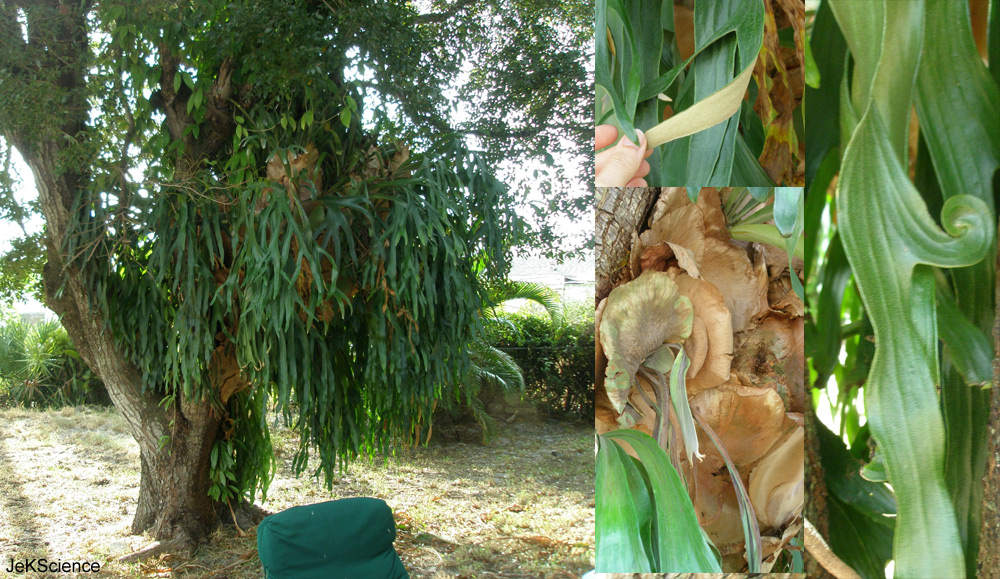
actually). We have a tree in our new backyard. She has no less than 3
parasites on her. A strange rosemary-like one (with needle-like leaves),
a vine with a red-aggregate flower, and one I can only describe as
arboreal seaweed. I had seen odd things in the tree and assumed them to
be seed pods. Some have fallen and they are indeed seed pods!
Interesting ones too. Five lobed pods that split between the lobes. I
did not pry the dry, splitting one open to see what was in it, yet. I
also found a green one, not yet dry or cracking, and four out of five of
a completely broken one. I did not find the seeds that it would have
contained.

It took a little while to find it, but I identified the tree as West Indies Mahogany (Swietenia mahagoni).
The Wikipedia page has interesting information about it, including
everything from Christopher Columbus to pirates! OK, maybe not pirates,
but I think of them when I think of West Indies and the West Indies
Trading Company. I also must admit that knowing it is mahogany has had
the quote “my apartment smells of rich mahogany” playing in my head all
day.
It also tells me that the tree is
Endangered (on the IUCN Red List). This is all at once neat and gives me
cause for concern. If it really is a West Indies Mahogany, and it
really it endangered, I suddenly feel like I have an obligation to find
out how to cure it of its three parasites. Is this the duty of my
landlady (as we are but renting)? I am quite sure my landlady wouldn't
do anything about the tree, and so I feel like it's almost by duty
simply because I'm the only one connected to it that will care!
Swietenia mahagoni, commonly known as the West
Indies Mahogany, is a species of Swietenia native to southern Florida,
US, The Bahamas, Cuba, Jamaica, St. Croix, United States Virgin Islands,
and Hispaniola. It is the species from which the original mahogany wood
was produced.
Swietenia mahagoni is listed as "Threatened" in the Preservation of Native Flora of Florida Act.
Subscribe to:
Comments (Atom)