Showing posts with label biodiversity. Show all posts

Saturday, November 30, 2013

Anthropology of Nature: Week 14 - 20131130

This blog entry is part of a project for the class Anthropology of Nature. 

Class Reflections:
From GoodReads
This week we did presentations based on the book Conservation is our Government Now by Paige West. The book itself is very interesting, especially after taking Environment and Society with Professor S. She was a geologist by training, petrologist by trade, and it was very interesting to see Environmentalism through her eyes, and I think I see that same representation of it through Dr. West's eyes. These educated people are looking at environmentalism from the perspective of one other than the environmentalist. Now, Professor S was an environmentalist, but she showed us much about greenwashing and I had to (and constantly try to) re-evaluate my own views on environmental acts. I did not agree with her all the time, just as I do not always agree with Dr. West, but both tend to have one major view in common: that politicising and governmentalising environmentalism tends to do more harm than good, in one way or the other. This is, of course, a very broad and sweeping generalizations on both of their opinions, and could be struck down when investigated critically, but serves its purpose here.

I will also note that I was grateful that I was not the only person to point out the societal damage caused by the reformation of the Maimafu peoply by the Seventh Day Adventists. I really truly try to leave religion out of conservations and lessons, especially when the conversation is scientifically based, but as soon as you mention politics it's almost impossible NOT to mention religion. Especially when the politickers are the religionists! I did get an odd high-five from a fellow student over "telling it out", whatever that means. I'm not sure if he was more impressed by the religion part or the rest of it, but I would guess the latter.
Some of the other presentations were quite interesting, and some, of course, were less interesting. I had already planned on finishing the book, since it is actually really intersting. Funny how my motivation waned when I realized it was assigned and no longer intrinsic! Weird.

Observations of Environmental Anthropology in the Specimen "Me":
I've been thinking hard about how to articulate what I want to do with Environmental Science: what I want to get out of it and what I want to "do with it" when I get done with the masters. I met with a professor about being my graduate advisor in the program, and the answers I gave did not seem to satisfy him. It also turned out that though he's worked with birds via population genetics, it's not really his focus, and he thinks I should try someone else. Le sigh. It also seems that even though I'm taking the GRE right after finals, he (and it seems most) won't want to risk getting involved with me until after they see the scores. It makes sense, but does put a hitch in my plans. I'm not sure if I'll be able to secure a letter from an advisor over Winter Break, and my paperwork needs to be completed by Febrauary, when they make the funding decisions. They have some assistanceships available, and I honestly cannot afford to go to graduate school without one. At least, not anywhere near full time. I will find a way, one class at a time, but that resulted in a very long bachelors experience I am hoping to not repeat. So. I need to hone my desires, not so sharp as to already have an idea for my thesis, but sharp enough to be able to articulate (better) what I want out of a masters in Env Sci. Apparently, "doing research and applying that research to conservation projects", was not specific enough. Granted. Now to fix it. Soon.

Ethnography of the South Floridian:
I do not have much to go in this slot this week. At least, nothing positive.

I volunteered with MGSA at the football game. We set up recycle bins and Clearstream recycle bins, and then cleaned up after the tailgate parties. Oh, my. I could not believe the waste and garbage. It was... painful. Seriously. The amount of recycleable materials (glass, plastic, and aluminum) just strewn about, near recycle bins, overflowing from black waste bins, was, unbelievable. I found near a dozen 8 oz water bottles, full, unopened, mired in a 1.5ft diameter puddle of uneaten potato wedges and fry grease. It was so stomach-turning that I could not bring myself to recover the bottles to donate somewhere. Just, unbelievable disgusting. The pile itself was less than a foot from the garbage can, which was full, mostly of recyclables. Cigarette butts, glossy postcard-style ads, plastic bits from decorative whatnots, just, everywhere. Broken thong sandals, hats, reusable cups, just everything. It looked like the opening scene from a post-apocalyptic movie, only instead of dead cars on a dusty road it was party waste on a very green lawn. Ugly. It was so ugly. And all those drinking laughing dancing playing people, seem so ugly.

A man threw his cigarette butt on the ground in front of my house, after buckling his small daughter into the backseat of their Honda CRV style vehicle. I used to think that if I was the facist-dictator-of-America, I would have executed people who littered, because it evinced a certain lack of participation in the continued upkeep of civilization and therefore denoted a uselessness in the human. I've grown up a little, now, were I the facist-dictator-of-America, I might just demand a pinky joint. Especially for cigarette butts. Those things take forever to decompose, and a lot get eaten by animals. I could link a bunch of resources and inundate you with my empassioned disdain for the habit and the waste it causes, but I think I've already painted myself in a negative light this time around.
Cest la vie.


But if you get curious, http://www.cigarettelitter.org/index.asp?PageName=Facts

Saturday, November 23, 2013

Anthropology of Nature: Week 13 - 20131123

This blog entry is part of a project for the class Anthropology of Nature. 

Class Reflections:
On Wednesday I got to listen to some fellow students read and show their journal entries. It was really nice to hear my fellow biologist's journal sound as it did, though now I seem to have a problem qualifying it. Mine feels this way to me, when I reflect upon it. Not, technical, per say, but certainly different from those I heard in class. More, analytic maybe. Does that mean I remove myself from the subject? Certainly not. I read once that people might think a scientist loses the ability to see the magic in nature, and therefore cannot love it. On the contrary, the scientist sees the wonder of nature through an entirely different lens, and is still astounded by it. I grok that wonder in the other students in class. I heard their prose and saw them play and listened to their words, and smiled. I love feeling like they are actually interested in being part of their environment, an active and aware part instead of this sad view I seem to have of others (with the littering and the laissez-faire attitude over water and air quality). Someone started up the conversation about litter again, and I was almost overjoyed! Mission Green was tabling that day and bringing volunteers on short litter walks around Heritage Park! I of course announced it to any that might be interested. I did have one girl come and give her contact information! YAY!

Sunday, November 17, 2013

Anthropology of Nature: Week 12 - 20131117

This blog entry is part of a project for the class Anthropology of Nature. 

Ah, the adventures of a senior in college. I went out and bought a jar of caffeine pills. Yep. How sad.
I have been making great strides though, in life and in my connectedness to the environment.

Saturday, November 2, 2013

Anthropology of Nature: Week 10 - 20131102

This blog entry is part of a project for the class Anthropology of Nature. 

My Tree is an Endangered Species...Now What?

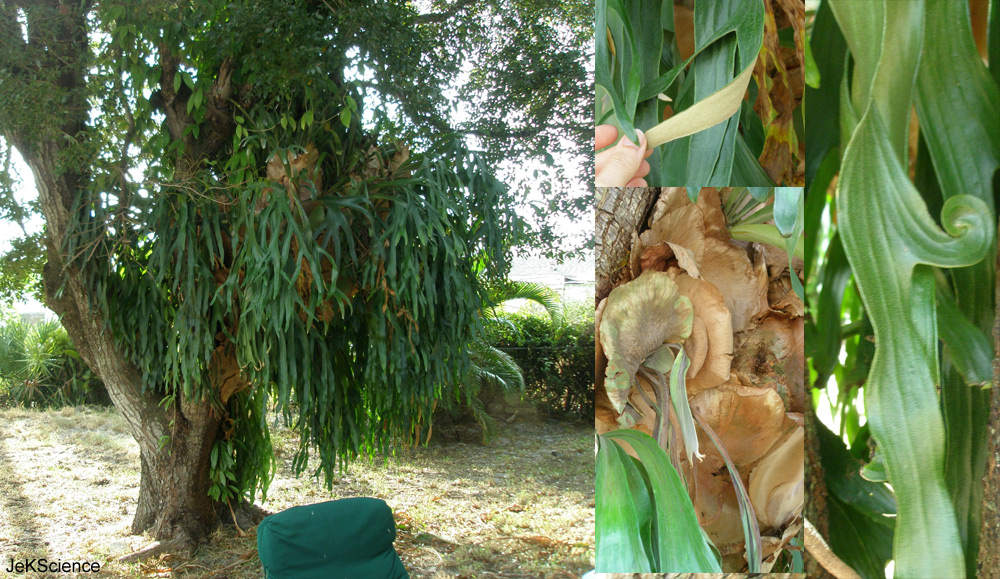
            When we moved, I lost my mango tree. Granted, I almost loathed it near the end of mango season, when the yard smelled of rotting mangoes (which smells a little like vomit, actually). We have a tree in our new backyard. She has no less than 3 parasites on her. A strange rosemary-like one (with needle-like leaves), a vine with a red-aggregate flower, and one I can only describe as arboreal seaweed. I had seen odd things in the tree and assumed them to be seed pods. Some have fallen and they are indeed seed pods! Interesting ones too. Five lobed pods that split between the lobes. I did not pry the dry, splitting one open to see what was in it, yet. I also found a green one, not yet dry or cracking, and four out of five of a completely broken one. I did not find the seeds that it would have contained.


            It took a little while to find it, but I identified the tree as West Indies Mahogany (Swietenia mahagoni). The Wikipedia page has interesting information about it, including everything from Christopher Columbus to pirates! OK, maybe not pirates, but I think of them when I think of West Indies and the West Indies Trading Company. I also must admit that knowing it is mahogany has had the quote “my apartment smells of rich mahogany” playing in my head all day.

            It also tells me that the tree is Endangered (on the IUCN Red List). This is all at once neat and gives me cause for concern. If it really is a West Indies Mahogany, and it really it endangered, I suddenly feel like I have an obligation to find out how to cure it of its three parasites. Is this the duty of my landlady (as we are but renting)? I am quite sure my landlady wouldn't do anything about the tree, and so I feel like it's almost by duty simply because I'm the only one connected to it that will care!


 Swietenia mahagoni, commonly known as the West Indies Mahogany, is a species of Swietenia native to southern Florida, US, The Bahamas, Cuba, Jamaica, St. Croix, United States Virgin Islands, and Hispaniola. It is the species from which the original mahogany wood was produced.

 Swietenia mahagoni is listed as "Threatened" in the Preservation of Native Flora of Florida Act.

Saturday, October 26, 2013

Anthropology of Nature: Week 9 - 20131026

This blog entry is part of a project for the class Anthropology of Nature. 

http://www.greendrinksmalta.org/2011/04/
environmental-philosophy-april-green.html
This week we read about environmental spiritualism, and I watched a presentation on biomimicry, or, mimicking the traits selected for by natural selection in solving mankind's technological problems. In my mind, they were related, linked, and I want to try to explain why.

I see myself as a scientist, and I tend to see things in a way that some feel is gritty or reductionist or even unpretty. Yet, having an understanding of Life at this other level (say, the molecular level) means only that I see the interaction of molecules as you see the tumbling of two birds in the sky. It's as beautiful to me as the latter is to you. So when Professor Benyus talks about the biochemistry of the creation of Mother of Pearl in a mollusk, the semi-technical language sounds to me as a creation poem might sound to another.

Friday, October 25, 2013

Anthropology of Nature: Natural Design

This blog entry is part of a project for the class Anthropology of Nature. 

2013 October 25
Biomimicry
  How might such solutions, products, or knowledge change your life?

Janine Benyus'   dream is that by integrating biomimicry into chemical and physical engineering we can increase the efficiency of our living, the quality of our living, and reduce the negative impact (or simply impact) of these advances on our one and only planet.   Professor Benyus that there are   organisms out there that have already solved the problems that   we, as a technologically advanced species, have spent untold years trying to solve. She says we need to look towards the Earth's biosphere, to the more than 30 million well-adapted solutions to, quite possibly literally, all of life's problems. These solutions come with 3.8 billion years of field-testing, with the failed proposed solutions naturally removed from the table by a failure to thrive. She presents twelve idealistic and, in my opinion, quite realistic, solutions to modern technological problems via biomimicry, or drawing on the natural world for inspiration and adaption of Mother Nature's "trade secrets".

What is innovative about the product or idea presented?

Professor Benyus argues that the problems of modern engineering and modern technological advancement is not a lack of innovation but a lack of integration. Many of the proposed biomimicry solutions reduce, and possibly remove, the need for hazardous and non-biodegradable chemicals. This is not a cry against "unnatural dangerous chemicals" like so many sadly misinformed would-do-wells railing against "unnatural preservatives" in canned goods, but using mankind's technology to imitate and fabricate the chemicals found in nature that do what we need them to do. An example of this is aspirin. We have taken salicylic acid, a phenolic acid from the bark of a tree, and found it to have pain relieving properties. However, this acid wreaks minor havoc on the human stomach lining. By imitating nature and creating acetylsalicylic acid we have reproduced the pain relieving properties while removing much of its volatile nature.


Why does the solution, products, or knowledge benefit the planet?

Consider the basic model of acetylsalicylic acid as we idealize this same process as superimposed upon novel solutions of nature. A surface with a particular texture that bends and reflects light in such a way as to remove the need for pigments and paint (chemicals and the chemical residual waste). Consider the energy harvesting device inside bacterium being used to model a fuel cell that takes up hydrogen and produces energy without rare metals...a solution to the fuel crises (yes, plural). Or a water collecting device that draws nearly pure water out of the atmosphere, to quench the thirst of desert children. This biomimicry has the potential to reduce our negative impact on the planet while increasing our quality of life and success of humanity as a whole!

How does the solution, products, or knowledge transform human-nature relationships?

"And thirdly, how does life make things disappear into   systems? Because life doesn't really deal in things; there are   no things in the natural world divorced from their systems."
All of Professor Benyus's proposed solutions bring technology more in line with the human race being a Part of Nature, a Part of the Environment that uses the materials and strategies of our fellow beings, and less a species that uses our limited environment as an ends to a tenuous and fleeting means.


Identify possible pitfalls in the solutions, products, and knowledge presented.

The problems, as I see them, are a remaining reliance on fouling technology (that is, technology that fouls the environment in a devastating manner) in developing these green technologies. Do we simply ignore that as the End justifies the Means? Is that not exactly what modern technology does anyway? We now sacrifice resources and biospheric longevity in favor of human "advancement", will we simply polish a broken window in cause more environmental havoc in a quest to be "green" (the way we feel better about ourselves and our compact fluorescent lightbulbs that we source cheaply from China though their environmental protection standards could be considered nightmarish compared to our own)?

The ideas presented sound miraculous, and something akin to turning the human species into a race of beings desiring peace and time in the garden and living by the ethos of "harm none" while exploring a digital Britannica on a yeast-powered bamboo-shelled laptop with mother-of-pearl processors and recycled copper wiring, and a biofilm screen based on the iridescent dragonfly wing that self-repairs scratches and uses reflective light to brighten the screen in the way a cat's eye reflects so very little light into visible pictures on its optic nerve. I love this idea, I do, but I do not believe this fits the human nature to conquer and usurp and, well, capitalize. The idea is very Ferngully, very Avatar, very, beautiful and, I think, unrealistic. Tell the companies they can make a mint through less resources and less cost of waste disposal and more consumption and maybe, just maybe, you could get this "streamline, waste less, poison less" idea into someone's boardroom and under their grant signing pen.

Resources:

TedTalk (2005). Janine Benyus: Biomimicry's surprising lessons from nature's engineers. Retrieved form http://www.ted.com/talks/janine_benyus_shares_nature_s_designs.html

Biomimicry 3.8 (2012). Janine Benyus. Retrieved from http://biomimicry.net/about/our-people/founders/janine-benyus/

Saturday, October 19, 2013

Anthropology of Nature: Week 8 - 20131019

This blog entry is part of a project for the class Anthropology of Nature. 

PHEW. Hello Journal!

We finished moving! WEEE! Now just... unpacking... ugh. It took me three boxes just to find my New Directions Anthropology textbook. :(

I found a weird plant I wanted to share with you. I use "found" loosely. It was in the local Publix, but I've never seen it before. At first glance I thought it might be some relation to the Poinsettia plant, because the older leaves went from the Chlorophyll-A photosynthetic leaves to a rich magenta-pink, just this side of red. (Go go anthocyanins!) I must have looked weird as I dug at the base of the plant to extract the title card. It didn't have a genus-species on it, but only "Euphoria Hybrid". There was a small piece broken off (not by me) so I took it with me.
I think I have found it online, though I misremembered the name. It's "Euphorbia". It is, in fact, hybridized with a Poinsettia. "Costafarms" calls it a "Pick Me Pink". It's delicate, can't be dried out or in direct sunlight, grows in our zone (10b) but requires monthly fertilizer (unless flowering). In other words, I'd kill it dead. Ah well.

Saturday, October 12, 2013

Anthropology of Nature: Week 07 - 20131012

This blog entry is part of a project for the class Anthropology of Nature.

I never thought I could be so busy. Thou shalt not move while in student practicum, while taking 16 credits, while trying to make it through an honor society's New Member period (seriously, three mandatory meetings to fit in my already busy schedule? I'm a leader, not a miracle worker...), and definitely not while not sleeping. Counter-intuitive, that one should steal time to sleep to ensure that one has productive time. I had another migraine yesterday. Second one in a month, but the first two in almost 4 years. Just, sigh.
I do actually have something neat to talk about. I subscribe to National Science Teacher Association magazine and they had a piece on Seed Banks! It was back in the March issue, but I stack them up and go through them a page at a time, when I can steal that sort of time, so I only just found it. This interests me, dear reader, because I had chosen a TED talk on Norway's seed bank for an Anthropology assignment. Keen!

Banking on the Future: Seed bank investigations teach biodiversity and biocomplexity by Renee Clary and James Wandersee, published in the 2013 March issue of NSTA's The Science Teacher (the secondary science publication) talks about the need for seed banks, the existing seed banks already operating, and dispels some of the media myths about seed banks.

The five most common misconceptions about seed banks mentioned are:

Seeds kept in a so-called “doomsday vault” can “source” the replanting of a devastated and barren Earth.
Personally, I think this comes from people not being exposed to, or falling asleep during, the primary and secondary succession lectures of high school biology. Since I don't recall having that lecture in my high school, I'm not terribly surprised that more people my age and older (without higher education) wouldn't have heard about it.

All plant seeds can be “banked.”
This is false, because not all seeds can be banked. They specifically mention banana seeds!

Only in a global catastrophe will the banked seeds be used.
I think I believed this one. It turns out that the seeds will likely be dispersed once a year, as global catatrophes (like typhoons) destroy local seed crops and stashes.

Seed banks mainly store important plant seeds—those most valuable to the greatest number of people.
I think I addressed this one in my writing about seed banks. Though some banks only store agricultural crops, other store wild plants. Beyond that, seed it not turned down out of some perception of "value". The banks exist to achieve a scope beyond what we currently value, to protect what we have and conserve what we may need!

Seed banking is a one-time process.
This goes hand in hand with the previous notion, though I figured it would be a continuous process via never being able to complete the seed banks. The banks will need to be replenished as seed is dispersed after those afore-mentioned disasters. Also, apparently even freezing is not perfect, and the seeds will still die. Before that happens, they will be withdrawn and planted so they are not wasted, and their seeds harvested.
As a teaching magazine, it ends with a great idea for a classroom seed bank. I'd thought about doing one after reading about Svalbard's seed bank, but wasn't sure how to implement it. They already have some ideas for me! WEE!

As far as what I normally write about, I'll get back to it in a couple days, but I need need needed to get some of the things on my quest list (read, assignment list) knocked out by due dates.

Later Alligator!

Thursday, October 3, 2013

Anthropology of Nature: TedTalk Seed Saving

This blog entry is part of a project for the class Anthropology of Nature. 

2013 October 03
Seeds

1. How might such solutions, products, or knowledge change your life?
The 'product' in question is the Svalbard Global Seed Bank (1). The 'solution' offered by this product is the preservation of food-crop seeds through coordinated seed saving. The problem this solution address is the loss of agricultural biodiversity through climate change and mono-cropping. Mono-cropping is the agricultural process of growing just one type of plant. Usually this refers to growing only corn, season after season, instead of engaging in crop-rotation, but it also refers to growing just one type of that corn, usually one species.

This single-species monocropping is dangerous, even when not considering climate change. Diversity is the resource natural selection uses to make sure life continues. Consider the best known case of monocropping failure: Ireland's Great (Potato) Famine. Most have heard of it. One third of the farmers of Ireland grew one species of potato, but a fungus came and decimated this species of potato crop. Over a million people died of starvation, and a million more emigrated from Ireland (2). An example you might not have heard of, is the banana. Did you ever notice that banana-flavoring does not really taste like bananas? Well, it does. It tastes like the banana species that used to be common in US stores, the Gros Michel. A fungus wilt wiped out vast tracts of banana trees. After this catastrophe, growers switched to the Dwarf Cavendish, the species you eat today. All of the common bananas you have ever purchased from a United States grocery store are genetically identical. They are clones. They do not even have seeds; those tiny black spots in the banana are the remnants of what would develop into seeds in a wild plant.

The saving of seeds would prevent the extinction of crop species. Not only is there an intrinsic value in protecting the biodiversity of our environment, but this seed saving gives the human species options if climate change or blight makes us unable to grow the crops we currently subsist on.

2. What is innovative about the product or idea presented?
The Svalbard Global Seed Bank utilized an existing structure, an old mine, to create the bank itself. The facility takes advantage of the freezing landscape as natural refrigeration for the seed bank, as the best way to save seeds is to dry them and freeze them (1). Its purpose is not unique, as there other seedbanks, but their common goal is innovative: conserve something that is not actually being used, because the world might need it.

3. Why does the solution, products, or knowledge benefit the planet?
As stated, biodiversity gives us options. If every welsh sheepdog on the planet spontaneously perished, ranchers could turn to bearded collies to herd their stock. If your favorite pen dies, but you still need to write your paper, you turn to another pen even if the blue is not quite the same color, because you NEED to finish the paper. The stock NEEDS to be herded. Humans NEED agriculture. It is arguable that human civilization, as it stands now, only exists because of the development of agriculture. It makes sense to protect our future agriculture through the preservation of threatened species and conservation of redundant species.

4. How does the solution, products, or knowledge transform human-nature relationships?
The idea that agriculture is variable, that the foods we eat are not always available year round or in our hometowns, tends to only register in our minds when we see the cost of fruits and vegetables in the grocery store. Apples because less expensive in the fall, for example. The loss of biodiverstity profoundly affects humans by changing their environment; it changes what is available to them from their environment. Seed saving projects aim to prevent that by encouraging the view that we are part of this changing environment and can and will be affected by it, period. By promoting the knowledge of the need to save biodiversity, it promotes the notions of human-environment connectedness.

5. Identify possible pitfalls in the solutions, products, and knowledge presented.
The Svalbard Global Seed Bank actually only save agricultural crop species. Essentially, even in trying to save food plant biodiversity we are looking at food plants through a distinctly ethnocentric lens. Have Westerners stored seeds of the Balsam Apple vine? The plant is poisonous when ripe, but unripe cukes are edible, though bitter. It is arguable that no one facility or organization can save everything, so it is necessary to continue the idea with other seed banks that focus on saving other types. For example, the Millenium Seed Bank Project in Sussex, London, England, saves 'wild plant' seeds. They currently have the largest number of seed species, reaching one billion in April 2007. In October 2009, it reached its 10% goal of banking all the world's wild plant species by adding Musa itinerans, a wild banana, to its seed vault. As estimates for the number of seed bearing plant species have increased, the current 33,187 species that have been banked represent 11.06% of the global total (4). It could be argued that the Svalbard facility is actually the small focus facility for the Millennium project. Either way, redundancy is key, and that makes multiple seed banks, in multiple locations, necessary.

Resources
1. http://www.ted.com/talks/cary_fowler_one_seed_at_a_time_protecting_the_future_of_food.html
2. http://en.wikipedia.org/wiki/Great_Famine_(Ireland)
3. http://en.wikipedia.org/wiki/Gros_Michel_banana
4. http://en.wikipedia.org/wiki/Millennium_Seed_Bank_Project

If you are really interested in the idea of seed saving, I can offer you two interesting works of Fiction that revolves around it. Treasure Planet, an animated movie based in a future that seems a lot like Treasure Island, and revolves around the discovery of a seed ark that could save the dwindling human species, and City of Pearl by Karen Traviss. The latter includes an interesting look at what could happen if agriculture becomes dominated by corporations and their trademarked crop species, but includes the discovery of a seek ark that could save Earth from these corporations.

Wednesday, October 2, 2013

Anthropology of Nature: Week 6 - 20131002 MY Nature...

This blog entry is part of a project for the class Anthropology of Nature. 

Last week I wrote about the vine in my backyard. A couple days ago a group member of mine, who was raised on some islands rife with the vine, searched her memory for its name. It was only a short moment, but I offered "Balsam Apple", as quick as a blink she assured me "No, it's Cersei" (phonetic). "We use it," she continued" to treat [something, my apologies, I forget]. The image on her slide was the yellow egg-shaped ridged fruit on my vines, with tiny red pomegranate-seed-like-seeds poking out through a curled back end.

Wednesday, September 11, 2013

Anthropology of Nature: Week 3 - 20130911

This blog entry is part of a project for a college course, Anthropology of Nature.

Some Class Reflections:

This week the class did Townsend presentations.

The ethnoecology group was very interesting. I had no idea that there were so many known language. I had heard about languages of indigenous people disappearing, and I think realizing that there are so many of them makes it so much more heartbreaking. I already think it's a crime that Latin isn't taught in more schools (pfft, 'dead language', Science isn't dead and knowing Latin would make deciphering science and so many romance languages so much easier!). How many ancient texts will we find in the future, and be unable to translate, because we force a peoples to speak English (historically, so we can then hand them a Bible and count them tithers)? I heard once that in childhood we destroy, burn, laugh, and in adulthood we repair, save, and mourn. Apparently that's true of ourselves as a species too.

I was amused with the Universal Dichotomy group. I'd seen many parallels to their information through my Women in Religion course, and even Abnormal Sexuality, but what really amused me was a big splat of irony. One female spoke about gender norms and how women tend to engage in self-restricting habits. While she was talking about women's equality and having us listen to No Doubt's "I'm Just a Girl" I couldn't stop staring at one of her images. A man, in business attire, playing at tug-of-war with a women in women's business attire, complete with open-toe-high-heels, the kind so high that you need an ankle strap. Talk about not being on equal footing. I took this image's place in her talk to be a sign of women successfully competing in today's world, and yet she mentioned self-restricting habits and uses THAT image. I desperately wanted to ask if she was aware of the irony.

The rest of the groups were pretty well done. I liked the Role of Religion in Agriculture group. The Water Temples of Dewi Danu and the rice system was fascinating. I enjoyed hearing about how the introduction of the Green Revolution damaged a working system. Not in a sadistic way, but in the "even when we try to save the world, we tamper with long-standing working models and force them to collapse" kind of way.
For our own presentation, I'm always terribly critical. It wasn't as interesting as some of the others, but then again we DID have to outline the steps of mining. I think I'll try for the more boring part of our topic next time and see if I can Teach it Up to the students: see if I can make it a little more engaging. I talked too much and too fast.

Observations of Environmental Anthropology in the Specimen "Me":

I realized that when I talk about environmentalism and what I think it is, I'm really talking about what I wish it was. I sat the MGSA club fest table today, for about an hour and a half, and heralded people in to us. I'm pretty good at that. I realized that when I was explaining what the group does I mentioned things that I had recommended we do (to the other group members at the first meeting). We have no plans for a Movie Night showing "Tapped" and then engaging in a talk/debate about water bottles and the low-regulation of their contents, and yet I mentioned it to at least two people. I hope I didn't misrepresent us too much. I don't want people to be let down if I can't swing that event. Does that make me an idealist, or simply an exaggerator? Boooo. :(

Ethnography of the South Floridian:


Sitting the table gave me a good opportunity to see what people thought of environmentalism, while I people watched. How much more Anthropology of Nature can one get? Answer? People don't want to put a lot of work in, but want results. Attend an environmental leadership conference for four days, paid by FAU? No thanks. Beach clean up? Maybe. Save the world by just changing a 2-second habit? Yea, that had the most people biting. Ah well. It's that sort of laziness that got us all into this situation anyway. Convenience here, free stuff we don't need there (says the girl who came home with a recycled paper notebook and a MGSA polo shirt, but hey, those are for 'work', right?). Le sigh.

Saturday, August 10, 2013

20130228 Gulf Specimen Marine Lab - Panacea Florida

The Gulf Specimen Marine Lab is tucked in among really nice seaside residences. A small front building contains the gift shop and a small office, while the aquariums are pretty much all outdoor or in open air tents.  They have several touch tanks with various  shell-life and horseshoe crabs (mating, I  might add), but some tanks were strictly  "no touch".  The marine lab is a working lab  and human interference in the experiments  means trying to account for the errors you introduce or injury you cause (via the  chemicals on your hands) or starting the entire experiment over from scratch. It was a really cool place.

They had a nurse shark pair and their calf. I think I had to take ten photos just to get one with one adult and the calf in the same shot. The parents swam in circles in the small-diameter of the tank (maybe ten feet). One stayed near the calf  nearly all the time, and following it when it swam off.

Allie is a Loggerhead Sea Turtle. They're endangered and are commonly rescued after being damaged by motorboats or swallowing fish hooks. Allie endured the latter. GSML removed her hook and rehabilitated the 250 pound, 50 year old, turtle so she could be released (which they did June 22, 2013).  It takes a lot of fish to feed a turtle that big, so the lab offers "adoptions" to fund her. I felt I had to, and earned a little "Certificate of Adoption" in thanks! Wee!

I got myself a Patch (my favorite kind of  souvenir) and just enjoyed all the very  neat wildlife! I loved this place!